That lie has stopped you getting your health back. Here I tell you what it is, why nothing you've tried has worked, and how I work so that this time is different.
Three ways of looking at the same thing

The sticking-plaster system

Big promises and no proof
Before touching anything, knowing what's wrong

You're invited out to dinner on Saturday.
And before you answer, inside you've already started working out how you'll be on Sunday.
“I don't know, I'll let you know.”
You arrive at the restaurant, look for the toilets before you sit down and choose the safe dish on the menu.
Halfway through dinner you open your bag and take what you always take. Someone asks what that is.
“I just have a delicate stomach.”
With a smile, so nobody asks any more.
And to your friends you become the one with the stomach.
And at some point you stopped believing this was a problem and started believing it was you.
Look.
The problem is not you.
The reality is that conventional medicine is NOT set up to make you well. It is set up to control the symptom, and to keep you taking the pill every day.
And no, I'm not saying your doctor is bad. Nor am I telling you to stop your medication, because some people genuinely need it.
I'm telling you something else.
Behind conventional medicine there is a pharmaceutical industry that does NOT get paid when you get better; it gets paid every day you take the pill.
And that is why that system will never go looking for the cause of your symptoms. And every time you go back to the surgery it will give you another drug to cover up the symptom.
Then, probably, you looked elsewhere for an alternative. That's normal.
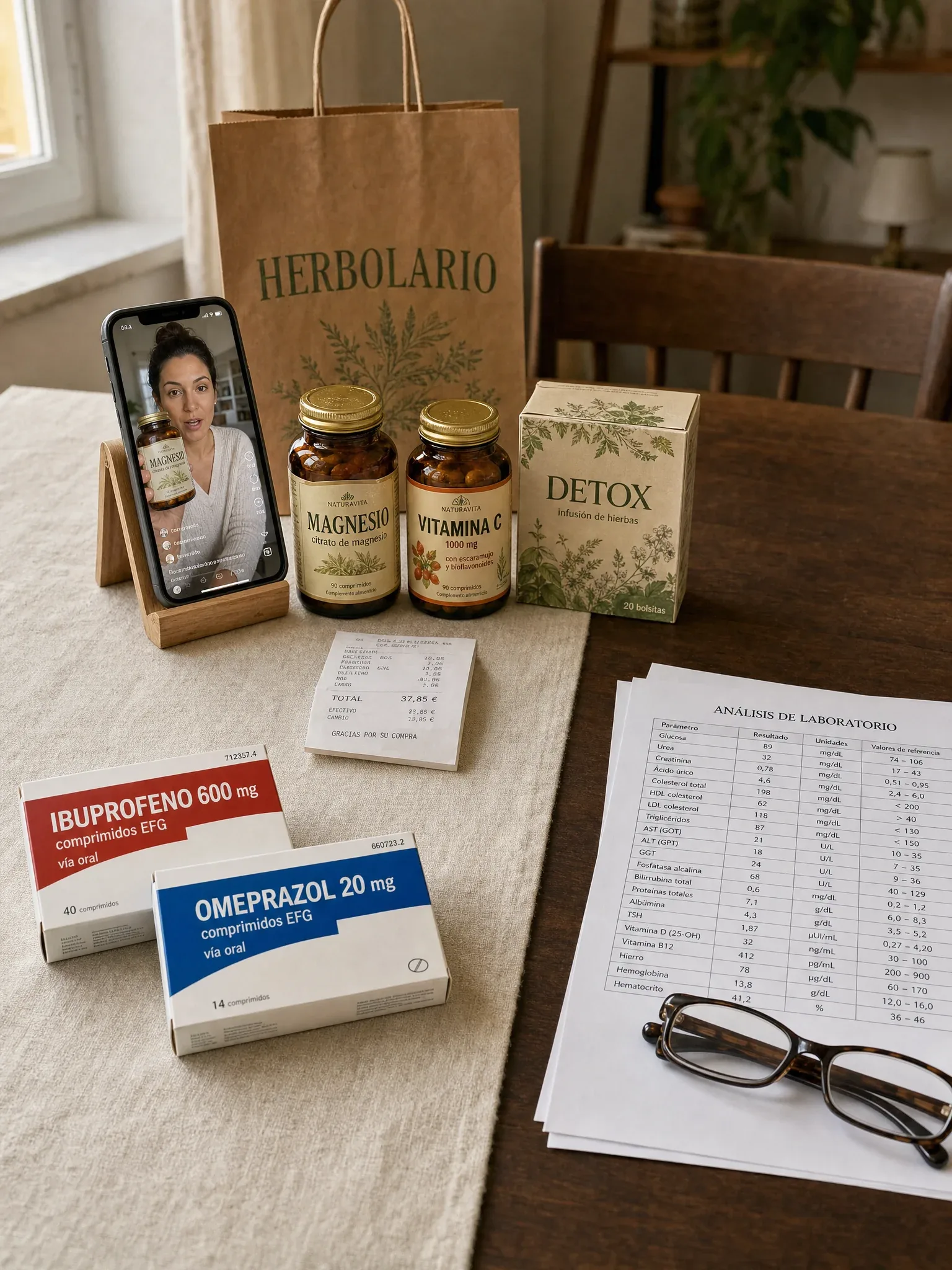
You went to the herbalist's and they recommended a bottle. You took the whole thing and it did nothing.
You tried what you saw in a video. Gluten-free. Fasting. Detox. And that didn't work either.
And by now you'll have noticed.
Nobody looked for the origin of your symptoms.
And it's not that you didn't try. You tried everything. The thing is that everyone got paid for selling you something. No one got paid for finding out the origin of your discomfort.
And this is where I begin.

01
If you've got this far, you've been dealing with this for a long time. And that you're serious about this.
So now I'll tell you how I work.
The first thing is a call. It's free, with no obligation, and it's only a few minutes.
You tell me about your case. And I tell you honestly whether I think I can help you.
Because not every case is right for me.
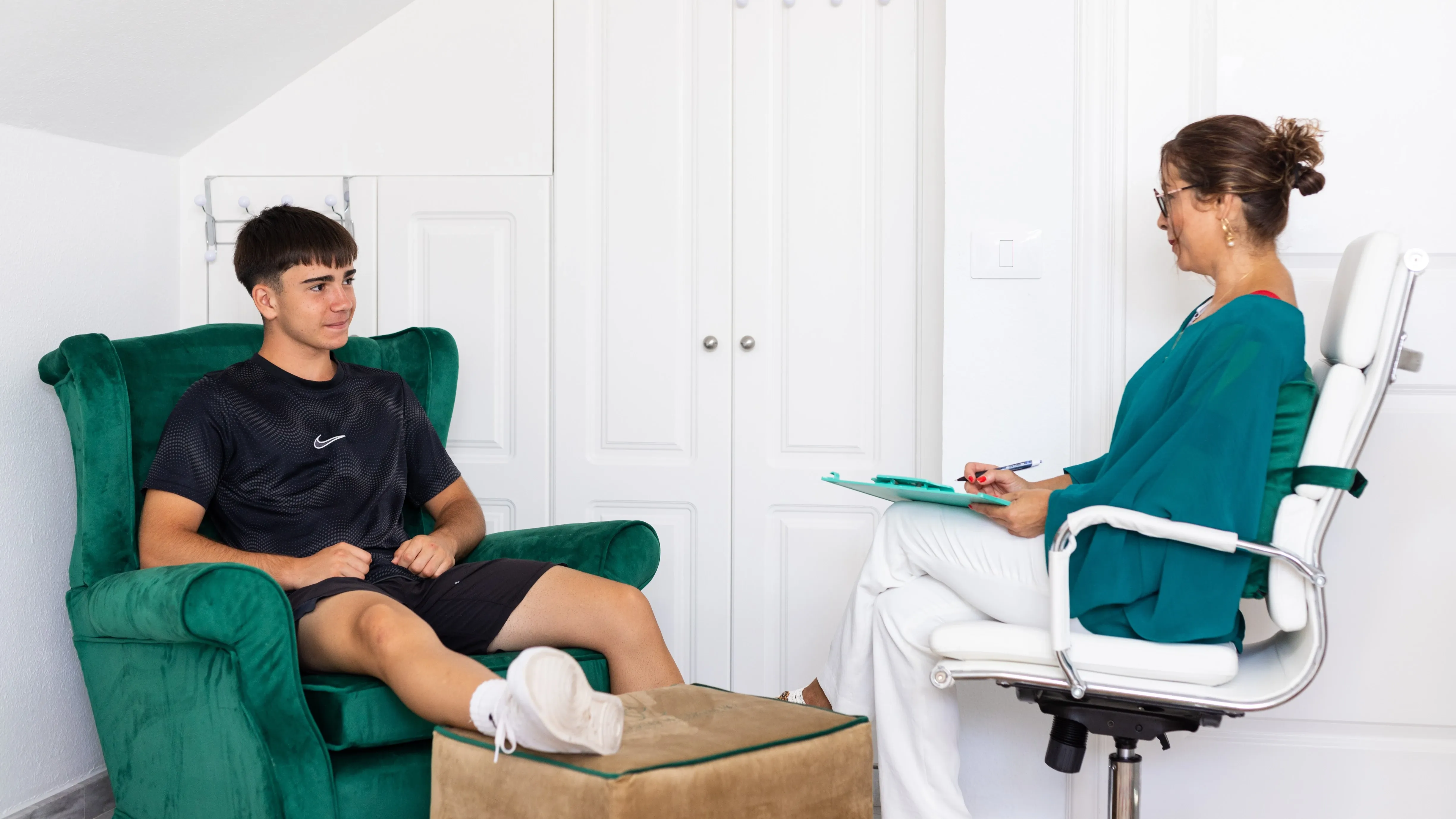
And if I see that I can help you, we meet at the practice.
There you'll have all the time you need to tell me about your case.
You tell me everything: what you eat, how you sleep, what you do for work, how you feel, what happened when all this started.
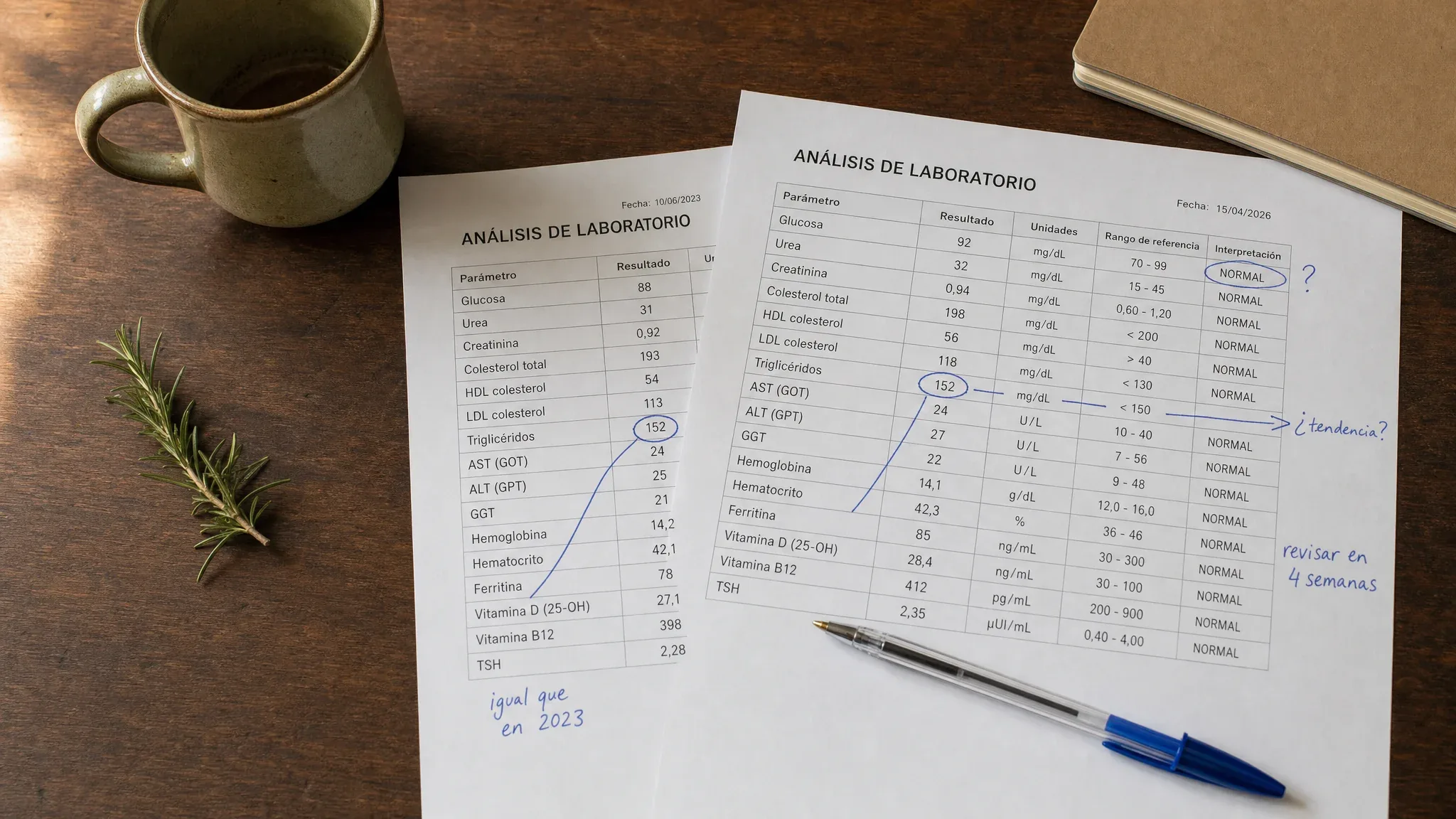
And bring your blood tests. All of them. The ones your GP ordered are useful to me too. In fact, I need them.
And if they all came back normal, even better. Those tests look for disease, and the margins of what counts as “normal” are huge. Read against a narrower margin, those same numbers do tell you what has gone out of balance.
If you don't have any, that's fine. I'll tell you which ones we need.

02
When you leave the practice, I carry on working on your case.
I keep your story and your results, and I give them as many hours as it takes.
You don't see that part, but it's where the real work is.
And to understand what is happening to you I need two things.
Data
Your blood tests. And the reports of everything you've already had done: endoscopies, ultrasound scans, breath tests, Helicobacter, microbiome studies, intolerance tests, mineralograms.
Context
What you eat and what disagrees with you. How you sleep. What you do for work and how much stress you carry. What medication you take. What happened the year it all began. And how you feel.
With both in front of me I can see what has gone out of balance and where to start.
And then I sit down to build your plan. In phases and in a specific order. And I explain it to you, because I want you to understand what we will be doing at each stage.
And inside it you will find:
Most people don't get this far by reading. You did.
And now you'll be wondering how long all this lasts.

03
How long does this take? It depends on your case. But I'll tell you plainly: this is months, not weeks.
If you're looking for something quick, this isn't for you.
What I do tell you is that it has an end.
One ordinary Saturday you'll be invited out to dinner.
And when they ask you, you'll say:
“Yes. Where shall we meet?”
And you'll look at the menu and order what you truly fancy. And you'll order the best pudding.
You won't have to look for the toilets when you arrive. Nor will you be wondering whether what you're about to eat will disagree with you afterwards.
And the next day you'll wake up with energy for whatever comes, to play with your children, to go to the beach or to do whatever you feel like.
And that's it.
That day you no longer need me.
And if you've got this far and do nothing, you already know what will happen. Because you've been like this for a long time.
But the worst thing isn't that you carry on as you are.
Your body has been warning you for years with small signals.
And those signals don't go away, they get bigger.
Until one day they stop being signals and become an illness. With a name, with its treatment, and for life.
Think about it for a moment. An illness for life.
And when you get there, there will be nothing to be done; you will have to learn to live with it for ever.
That's all.
And now it's up to you.
And if you've seen yourself in all this and want to do something, tell me about your case and we'll talk.
It's a call. Free, just a few minutes. You tell me and I'll tell you whether I can help.
This website stores in your browser only what is strictly necessary for the form to work. With your permission, we also use analytics and advertising tools to understand how the site is used and to measure our campaigns. More details.
Storage of your progress through the form and of the choice you make in this notice. Without this the website does not work.
PostHog, Google Analytics, Meta Pixel, TikTok Pixel and Google Ads. They help us understand how the site is used and measure how our campaigns perform. What each one does.